- What Is an API? Types, Examples & How It Works (2026)
- API Full Form and Simple Definition
- How APIs Work: Step-by-Step
- Key Benefits of APIs
- Types of APIs:
- Types of APIs by Architecture
- REST APIs: The Most Popular Choice
- Real-World API Examples and Use Cases
- Why APIs Matter for Developers and Businesses
- Conclusion
- Related Reading
- FAQs
What Is an API? Types, Examples & How It Works (2026)
When you log into a website with Google, check the weather on your phone, or make an online payment, an API powers it all behind the scenes. But what exactly is an API? Let’s break it down simply.
API Full Form and Simple Definition
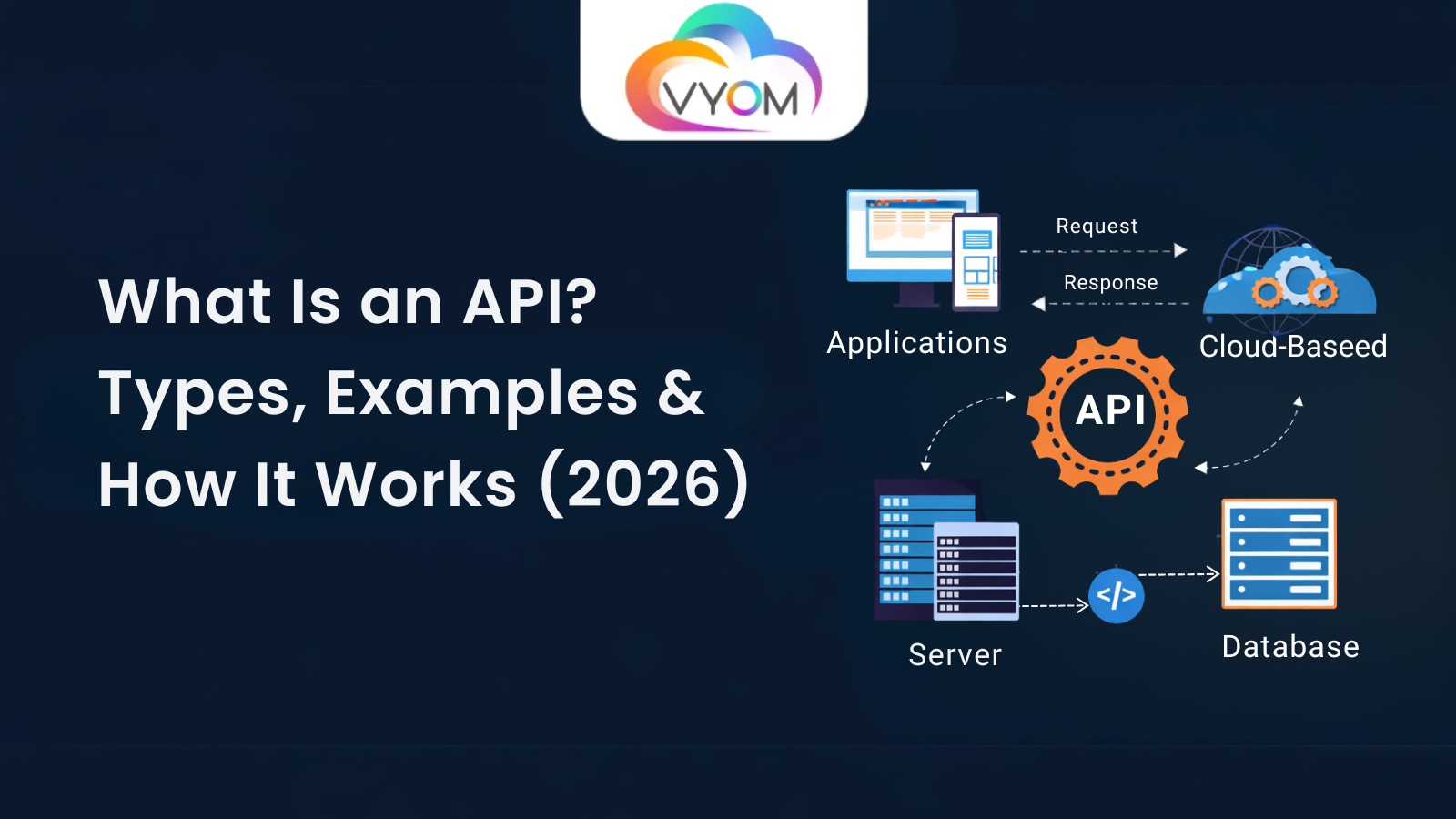
API stands for Application Programming Interface. It’s a set of rules that lets one app request data or actions from another—and get a clear response.
Think of it as a waiter in a restaurant: You tell the waiter your order (request), they relay it to the kitchen (server), and bring back your food (response). The API handles the handoff securely, without you seeing the messy details.
How APIs Work: Step-by-Step
APIs follow a straightforward request-response flow:
- Request – Your app sends a structured ask (e.g., “Get weather for Bhopal”).
- Processing – The server (like a weather database) handles it.
- Response – The API delivers data back, often in JSON format.
This happens over the internet using protocols like HTTP. It’s fast, invisible, and powers everything from cloud servers to gaming apps.
Key Benefits of APIs
APIs supercharge development and business. Here’s why:
- Easy Integration – Connect systems without rebuilding from scratch—ideal for cloud hosting or Minecraft servers.
- Faster Builds – Reuse features, cutting dev time by up to 70%.
- Innovation Boost – Mix services for new ideas, like real-time gaming leaderboards.
- Revenue Streams – Sell access to your API (e.g., premium server monitoring).
- Security & Scale – Controlled access with keys; scales effortlessly for high-traffic sites.
- Maintenance Wins – Fix issues in one place without downtime.
Types of APIs:
-
By Access Level
1. Public APIs
These APIs are open for all developers and can be used easily with minimal restrictions, such as an API key. They help businesses expand their reach.
Example: Weather apps or map services
2. Partner APIs
These are shared only with trusted partners after approval. They are more secure and mainly used for business integrations.
Example: Payment gateways in e-commerce
3. Internal (Private) APIs
These APIs are used only within a company to connect internal systems. They improve efficiency and workflow.
Example: HR system connected with payroll
4. Composite APIs
These combine multiple API requests into a single call, making applications faster and more efficient.
Example: Dashboard fetching user data, stats, and billing in one request
Types of APIs by Architecture
APIs can also be categorized based on how they are built and how they communicate with systems. Each type has its own features and is used in different scenarios depending on performance, flexibility, and security needs.
1. REST API (Representational State Transfer)
REST APIs are the most commonly used APIs in modern web development. They work over HTTP and use methods like GET, POST, PUT, and DELETE to perform operations. REST APIs are stateless, meaning each request is independent and does not store user session data. They usually return data in JSON format, which is lightweight and easy to read.
Best For – Web applications and mobile apps
Example – When you use a weather app, it sends a request to a REST API to get real-time weather data for your location.
2. SOAP API (Simple Object Access Protocol)
SOAP APIs are more structured and use XML format for communication. They are known for their high level of security and strict standards, making them suitable for sensitive applications. Although they are slower compared to REST, they are reliable and widely used in enterprise environments.
Best For – Banking systems and enterprise applications
Example – Online banking platforms use SOAP APIs to process secure financial transactions and maintain data integrity.
3. GraphQL API
GraphQL is a modern API technology that allows clients to request only the specific data they need, instead of receiving a fixed structure. This helps improve performance and reduces unnecessary data transfer. It is highly flexible and efficient for applications with complex data requirements.
Best For – High-performance and dynamic applications
Example – Social media platforms use GraphQL to fetch only the relevant data, such as user profiles, posts, and comments, without loading unnecessary information.
4. gRPC API (Google Remote Procedure Call)
gRPC is a high-performance API framework developed by Google. It uses binary data instead of text formats like JSON or XML, which makes communication faster and more efficient. It is commonly used in microservices architecture and cloud-based systems where speed and performance are critical.
Best For – Microservices and cloud computing systems
Example – Gaming servers use gRPC to handle real-time player interactions with low latency and high speed.
5. WebSocket API
WebSocket APIs enable real-time, two-way communication between the client and server. Unlike REST APIs, which follow a request-response model, WebSockets keep the connection open, allowing continuous data exchange. This makes them ideal for real-time applications.
Best For – Real-time applications like chat and notifications
Example – Live chat apps and multiplayer games use WebSockets to send and receive messages instantly.
6. Webhooks
Webhooks are event-driven APIs that automatically send data when a specific event occurs. Instead of constantly requesting data, the system pushes updates when needed. This makes them efficient for automation and real-time notifications.
Best For: Automation and event-based systems
Example: Payment gateways use webhooks to notify systems when a payment is completed instantly.
REST APIs: The Most Popular Choice
REST (Representational State Transfer) dominates because it’s simple and web-friendly. Use:
- GET: Fetch data.
- POST: Create new data.
- PUT/PATCH: Update.
- DELETE: Remove.
Servers don’t store session history, keeping things lightweight. Perfect for scalable cloud apps.
Real-World API Examples and Use Cases
APIs drive industries daily:
- Payments/Finance – UPI or Stripe APIs confirm transactions instantly.
- Healthcare – Apps pull lab results from hospital systems.
- Cloud & Gaming – Monitor VyomCloud servers or sync Minecraft player data.
- Travel – Aggregate flights/hotels from multiple providers.
- Social Logins – “Sign in with Google” via OAuth APIs.
- Weather – Location-based forecasts from OpenWeatherMap.
In gaming server hosting, APIs enable low-latency stats, DDoS alerts, and seamless integrations—key for SEO-optimized blogs like yours.
Why APIs Matter for Developers and Businesses
APIs aren’t just tech jargon; they’re the glue of modern digital experiences. From speeding up your cloud setup to enabling viral apps, mastering them unlocks efficiency.
Conclusion
APIs are the backbone of modern applications, enabling seamless communication between systems. Whether you’re building a cloud platform or a gaming server, understanding APIs is essential for scalability and performance.
Looking for high-performance cloud hosting?
Visit VyomCloud for scalable and secure solutions.
Related Reading
Read More: How to Build Your First N8N Automation Step by Step
Let’s Get Social:
Facebook: https://www.facebook.com/vyomcloudnetwork/
LinkedIn: https://www.linkedin.com/company/vyomcloud/
Instagram: https://www.instagram.com/vyomcloud/
FAQs
1. What is an API in simple words?
An API (Application Programming Interface) is a tool that allows different applications to communicate with each other by sending requests and receiving responses.
2. How does an API work?
An API works on a request-response system. A client sends a request, the server processes it, and the API returns the required data, usually in JSON format.
3. What are the main types of APIs?
The main types of APIs are Public APIs, Partner APIs, Internal APIs, and Composite APIs. They are categorized based on access level and usage.
4. What is the difference between REST and SOAP APIs?
REST APIs are lightweight, fast, and use JSON, while SOAP APIs are more secure, structured, and use XML, mainly for enterprise applications.
5. Where are APIs used in real life?
APIs are used in payments (UPI), social logins (Google), weather apps, cloud hosting, gaming servers, and many other digital services.
6. Why are APIs important for businesses?
APIs help businesses integrate systems, speed up development, improve scalability, and create new revenue opportunities through automation and services.